
Factory or Trading Company? How to Tell at the Canton Fair
Factory vs trading company at the Canton Fair comes down to four booth signals, eight questions, and one 18-character code you verify online the same evening. Both kinds of supplier win real business at Pazhou. The expensive mistake is guessing which one quotes you.
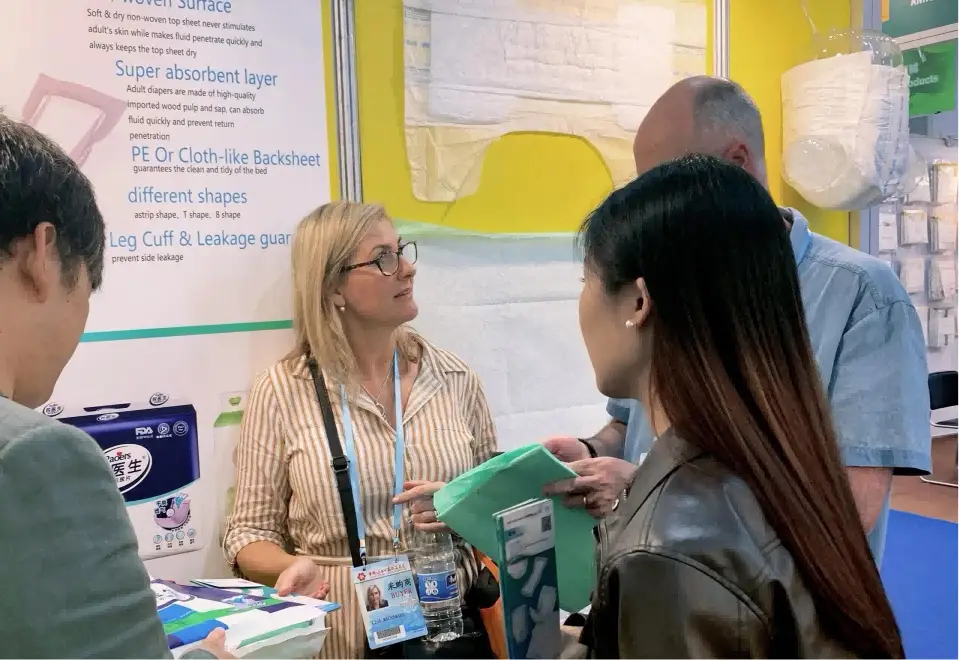
Factory vs trading company: what actually separates them
A factory owns production: the building, the machines, the tooling, the workers. A trading company owns the customer relationship and buys from factories across categories. In the middle sits the industry-and-trade company, running one plant and buying in the rest. All three exhibit at Pazhou, and all three answer yes when you ask whether they are a factory.
| What you are comparing | Factory | Trading company |
|---|---|---|
| Where the price comes from | Its own cost sheet | Factory price plus a margin |
| Minimum order | Tied to a production run | Usually lower, often mixed |
| Changing the product | Answers on tooling and cycle time | Has to go back and ask |
| Multi-category container | One product family only | Consolidates for you |
| Quality control | In-house, on its own line | Depends on the staff it sends |
The honest trade-off: a trading company is the better buy on a first order under one container, on a mixed load, or when nobody on your side can run quality control in China. You pay a margin for coordination you would otherwise cover in flights and staff time.
Booth signals you can read in ten minutes
Four things are readable before anyone speaks.
Booth type. Exhibitors apply through two routes: a brand booth confirmation or a general booth application. Brand booths pass a trade delegation review of qualification materials and scoring, so they skew toward established manufacturers. A large corner stand is a weak signal alone. A brand booth plus one product family is strong.
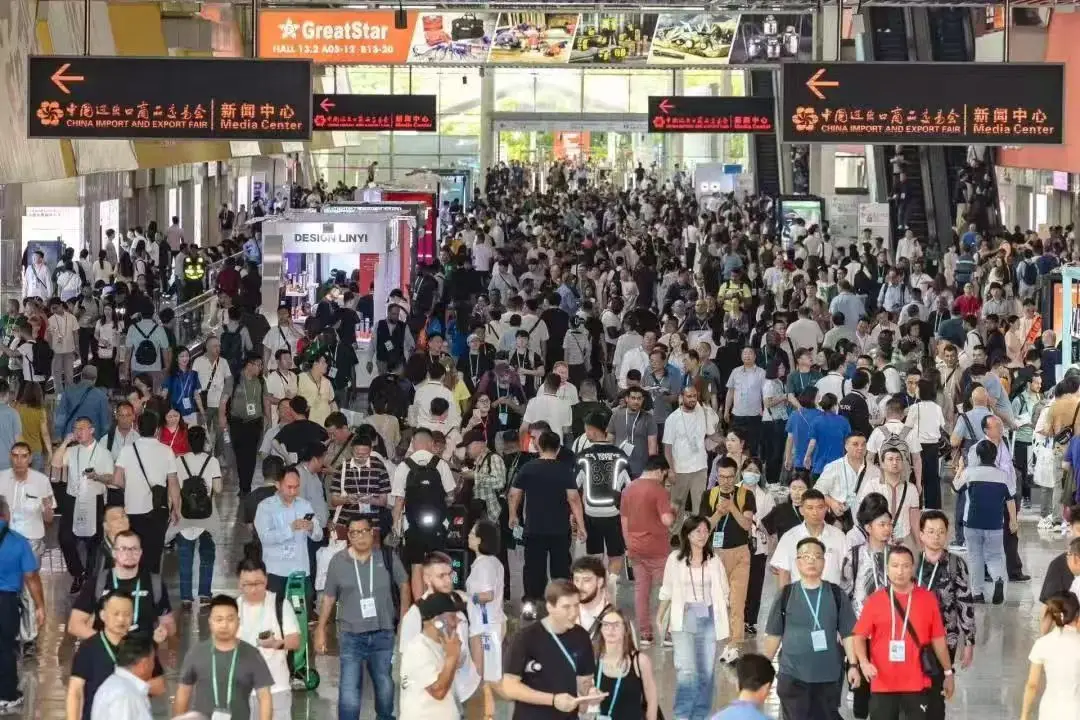
Category spread. The 140th session splits into 13 categories and 54 zones. A booth showing hand tools, kitchen scales and LED panels together buys in from several plants. A factory booth shows one process family: everything on the shelf leaves one machine type.
The samples. Check gate marks, weld seams and finish on three units of one model. A factory's samples share a tooling signature. Catalogs carrying other brand marks point to sourcing.
Who is standing there. Ask a technical question and watch where the answer comes from. Factory booths usually staff someone who discusses tonnage, cavity count or cycle time unaided.
Eight questions that separate the two
Asking "are you a factory" returns a yes every time, so it carries no information. These eight do the work in one booth conversation:
- Monthly capacity for this model, and today's lead time at that capacity?
- How many lines run this process, and how many people on them?
- Who owns the tooling, and what does an extra cavity cost?
- Which company is the certificate holder on your latest test report?
- May I photograph your business licence?
- Who is the exporter of record on your customs declarations?
- If I need the wall 2 mm thicker, what changes and how long?
- Which of your lines could I walk next week?
Numbers 1, 3 and 7 decide the factory vs trading company question. A factory answers in specifics. A trading company gives ranges, then confirms with the plant.
Works
Capacity and tooling
Ask for a number with a unit, then what limits it.
Wastes the visit
"Are you a factory?"
Every exhibitor says yes, and your first question is gone.
Verify the business licence in four steps
The booth conversation narrows it. The licence settles it, free.
1. Photograph the licence at the booth
Exhibitors keep a copy at the stand. Four fields matter: the 18-character unified social credit code, the registered Chinese name, the registered address, the business scope block.
2. Look the code up on the official register
Enter the code at the National Enterprise Credit Information Publicity System, run by China's State Administration for Market Regulation. The interface is Chinese, so hand it to your interpreter as a two-minute job. Check the name against the booth, the status for active, and the registration date against the track record you were quoted.
3. Read the business scope line by line
Business scope is where the answer hides. Wording built on production and manufacturing describes a licence to make things. Wording built on sales and wholesale describes a licence to trade them. A scope covering only sales means a trading company, whatever the booth sign says.
4. Cross-check the address and the exporter
Compare the registered address with the catalog's factory address, and the licence name with the entity on the test report. Three names across three documents is your answer.
When a factory visit is the only thing that settles it
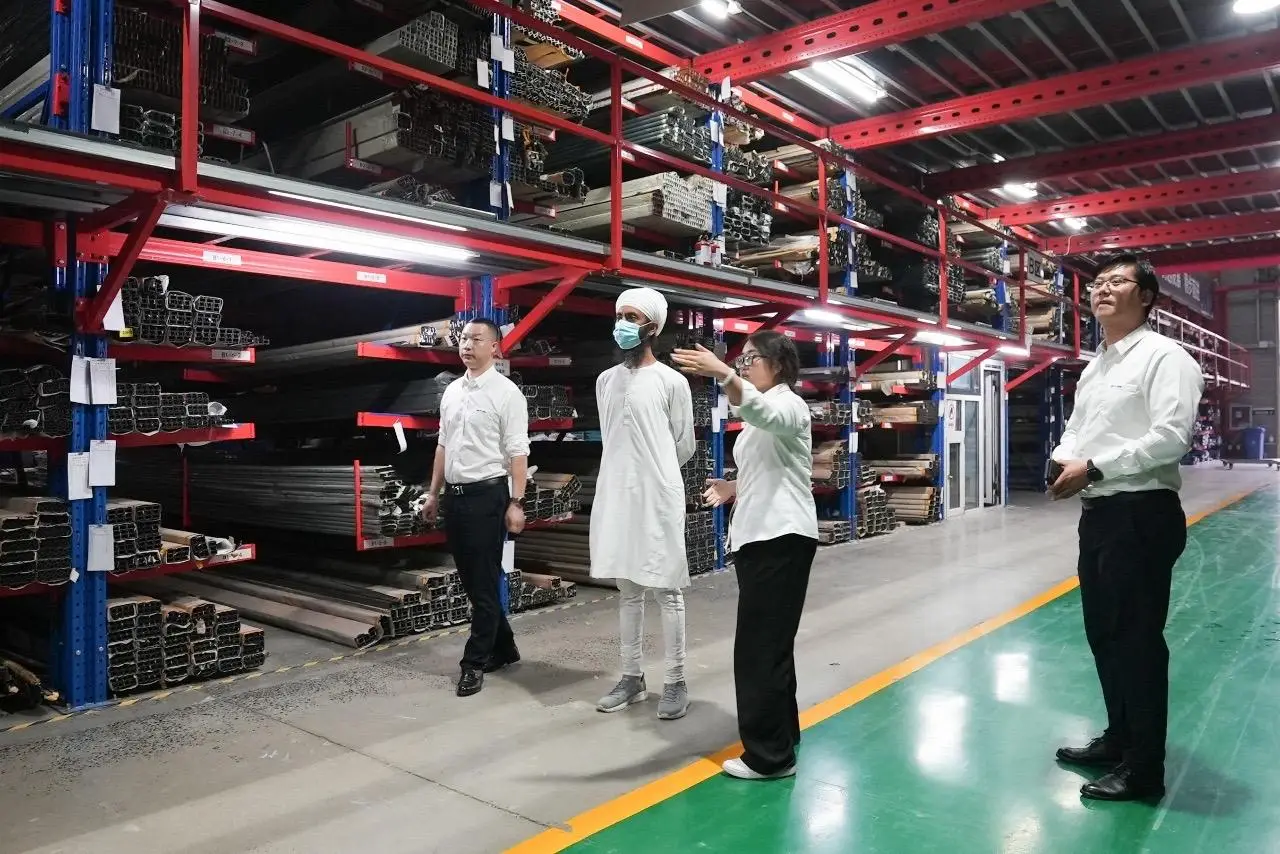
Paperwork proves a company exists. It does not prove your product runs on their line. A Canadian window and door maker came to the 2025 autumn session to replace a supplier, met three candidates at Pazhou, then drove to Foshan and signed with the one whose line was running its profile. One day settled it.
The timing works out neatly. The 140th session runs October 15 to November 4, 2026, and the venue closes to buyers for changeover on October 20 to 22 and October 28 to 30. Most Pearl River Delta plants sit one to two hours from Pazhou, so those six closed days are your plant-visit window. Check which Canton Fair phase your category falls in first, because it decides which changeover you get.
On the line, look for three things: your process running with your material, work in progress carrying part numbers that match your samples, and tooling stored on site under those numbers. Our team has walked more than 6,200 factories since 2013, and the gap between a good booth and a working line still shows up regularly.
- Licence and business scope checked on the official register before you meet
- An interpreter who asks the capacity and tooling questions in Chinese
- Factory visits arranged in the Pearl River Delta on changeover days
- A written report per candidate, entity names cross-checked
Factory vs trading company: frequently asked questions
Is a factory always cheaper than a trading company?
No. A factory quotes from its own cost sheet and a trading company adds a margin, so the unit price is usually lower at the factory. Landed cost can still run higher once minimum order quantity, mixed-category consolidation, inspection travel and a second supplier's freight are counted.
How do I check a Chinese supplier's business licence for free?
Take the 18-character unified social credit code from the licence and search it on the National Enterprise Credit Information Publicity System at gsxt.gov.cn, run by the State Administration for Market Regulation. The record shows registered name, address, capital, registration date, status and business scope, in Chinese, free.
Does a big Canton Fair booth mean the supplier is a factory?
Not by itself. Booth size follows the exhibitor's budget and its delegation allocation. The stronger signal is the application route: brand booths pass a trade delegation review of qualification materials, so they lean toward established manufacturers. A brand booth showing one product family beats a large stand showing five categories.
What is an industry-and-trade company?
It is a supplier that runs its own plant for part of its range and buys the rest from other factories. Many mid-sized exhibitors at Pazhou work this way. Ask which specific models come off their own line, because the answer varies item by item within one catalog.
Should I always buy factory-direct?
No. Factory-direct pays off on repeat orders of one product family, at volumes that fill a production run. For a first trial order, a mixed container, or a buyer with no quality control staff in China, a trading company absorbs coordination that would otherwise cost two trips.
Verify your Canton Fair supplier before the first order
Four booth signals, eight questions and one free licence check take under an hour, and they set what you pay for years of repeat orders. We run them with you at the booth and on the plant floor.
Send my Canton Fair inquiry → WhatsApp us
Planning the trip? Start with the complete Canton Fair 2026 buyer guide, or book booth support and interpreting. Session details sit on the official Canton Fair site.