
China Sourcing Agent Fees: What You Should Actually Pay
China sourcing agent fees usually run 5% to 10% of the goods value on small and mid-size orders, and 3% to 5% once orders pass roughly $50,000. Agents who don't work on commission charge a flat project fee ($300 to $3,000), a monthly retainer ($500 to $3,000), or a day rate for factory visits ($100 to $200). The rate matters less than you'd think. What decides your real cost is what the percentage is charged on, what sits outside the fee, and who else is paying the agent.
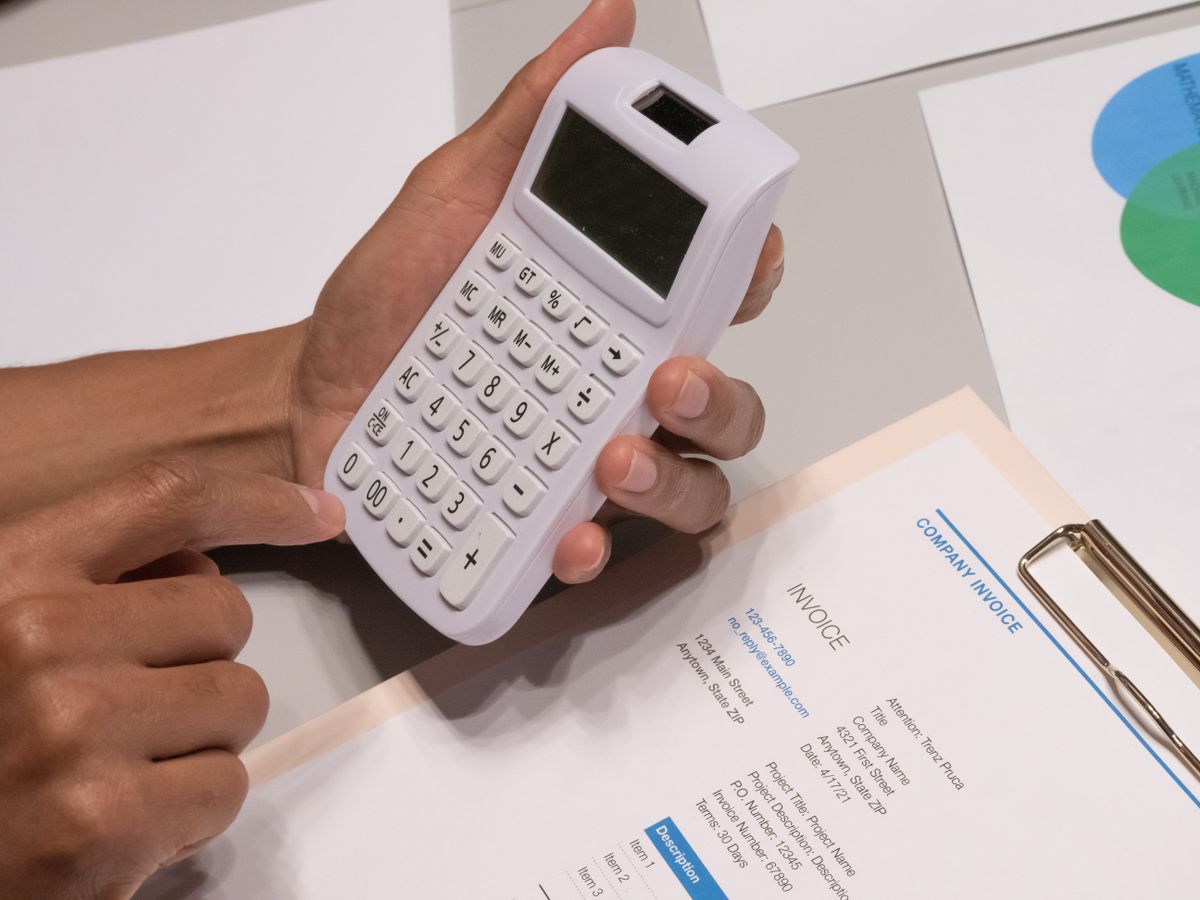
Most buyers open with "what do you charge?" The question that saves money comes second, and it rarely gets asked: "Does anyone else pay you?" Below are the 2026 market ranges, then one $20,000 order priced under four different fee models, so you can see where the money actually goes.
The four ways sourcing agents charge
A sourcing agent works for you. Depending on the deal, that means finding and checking factories, collecting competing quotes, negotiating in Mandarin, following production, booking inspection before you pay the balance, and consolidating shipments. You're paying for time, language and someone on the ground.
An agent is not a trading company. An agent never owns the goods and bills you a service fee. A trading company buys the goods and resells them with its margin built into the price, commonly reported at 15% to 30%. If your "agent" invoices you for the products themselves, you're dealing with a trader, and the factory price is now hidden from you. Our guide on how to tell a factory from a trading company covers how to spot the difference.
Fee models compared
| Fee model | Typical 2026 range | Fits | Get in writing |
|---|---|---|---|
| Commission on goods value | 5% to 10% on most orders; 3% to 5% on large programs | Most orders and repeat buying | The base (goods only), any minimum fee, the step-down on reorders |
| Flat project fee | $50 to $100 for a contact list; $300 to $1,000 for a vetted shortlist; $800 to $3,000 for one product from search to shipment | One-off searches, new product development | How many suppliers, what evidence for each, whether you pay if you order nothing |
| Monthly retainer | $500 to $3,000 a month, sometimes plus a small commission | Ongoing buying across several products | Products, orders and inspection days covered each month; what is out of scope |
| Hourly or day rate | $50 to $150 an hour; $100 to $200 a day for a factory visit with interpreting | Short jobs with a supplier you already have | Who pays travel, any cap, what the report includes |
| "Free" (paid by the factory) | Not disclosed | Rarely a good fit, unless fully disclosed | The factory's own quote. If they won't share it, stop there |
None of these is the right answer by default. Commission keeps the agent involved through production and shipping. A flat fee suits a defined job, such as checking out three factories in Ningbo before you commit. A retainer makes sense if you order every month across several product lines. A day rate is for the buyer who already has a factory and needs someone there for two days.

Commission rates by order size
Rates drop as orders get bigger, because finding a factory doesn't cost three times as much when the order triples. The bands below combine what several 2026 industry pricing guides publish. A complex custom product can price above its band, and a simple commodity below it.
| Order value | Commonly reported commission | Why |
|---|---|---|
| Under $5,000 | 8% to 15%, or a minimum fee | Same work as a large order, on a small base |
| $5,000 to $50,000 | 5% to 10% | The usual band for first orders and growing importers |
| $50,000 to $500,000 | 3% to 6% | Volume justifies a lower rate; agents compete for repeat programs |
| Above $500,000 | 2% to 4% | The agent is running a program, not a single project |
One $20,000 order, priced four ways
Here's a single order: $20,000 of finished goods at the real factory price, plus $2,400 of tooling and $1,100 of domestic freight to the port. Four agents quote it, and none of them is lying.
| Agent | Model | What the quote says | What you actually pay for the agent |
|---|---|---|---|
| A | 7% commission on goods | $1,400 fee on its own line | $1,400, visible and easy to compare |
| B | 7% commission, base not defined | $1,645, charged on goods plus tooling plus freight ($23,500) | $1,645. Same rate as A, about 17% more money |
| C | "Free," factory pays | $0 fee; goods quoted at $22,000 | $2,000 hidden in the unit price, about 1.4 times A's whole fee |
| D | $1,200 flat fee | Vetted shortlist of three factories with quotes; you run production | $1,200, and the production follow-up becomes your job |
Agent C has the lowest headline and the highest cost. It also comes with the worst incentive, because the person negotiating your price earns more when that price stays high. The numbers above are an example, but the pattern is common: buyers who audit "free" agent quotes regularly find markups of 10% to 15%.
Agent B is the one people miss. Nobody did anything dishonest. The rate was the same; only the base changed.
Percent of what? The commission base
This one line of small print moves more money than haggling over the rate. Ask three things:
- Is the percentage charged on the ex-works goods price, or on something bigger? Tooling, molds and domestic freight make the base larger without adding any work for the agent.
- Can the base change after you order? Some agreements calculate commission once freight and duty are known, so you can't predict the fee when you place the order.
- On reorders, is the base the original factory price or the current one? Add a few accessory and packaging changes over a year of reorders and a modest rate can drift up by a fifth.
Costs that sit outside China sourcing agent fees
Every fee model has a boundary, and budgets leak at the edges. These come up on almost every order:
- Pre-shipment inspection. A third-party inspection usually costs about $200 to $400 per inspector day in 2026, and most standard orders need one day. It's billed separately from the sourcing fee. Treat it as its own line in the budget.
- Samples and courier. Sample cost plus international express each way. With three candidate factories, this adds up before you've placed an order.
- Certification and testing. CE, FCC, RoHS and similar marks are priced per product and per market by the lab. An agent can coordinate testing, but the lab bill is rarely in the fee.
- Warehousing and prep. Consolidation warehouses charge by volume and storage time, plus per-unit fees for relabeling and barcodes.
- Currency spread. Agree the settlement currency and reference rate. One point of spread on a $100,000 order is $1,000, which can wipe out the price the agent negotiated for you.
- Travel for on-site days. Day-rate visits usually bill travel and hotel on top. Ask for a cap before the trip.
Who pays your agent, and how to check
Of all the terms behind China sourcing agent fees, this one matters most. China has no licensing body for sourcing agents, no standard contract and no regulator to complain to. Whatever protection you get, you write into the agreement.
If you pay a stated fee, the agent's job is to make your order work. If the factory pays, through a commission or rebate commonly reported at 5% to 15%, the agent's income depends on the factory keeping a healthy margin, and that rebate is already in the price you're quoted. The agent will still call themselves your agent. An undisclosed factory commission is the same markup a trading company charges, only less honest about it.
Ask once: "Who pays you, and will that be in the agreement?" A clean agent answers in a sentence and writes it down. "Don't worry about it" or "the factory pays us but it doesn't affect your price" are answers too.
Then check. Ask for competing factory quotes side by side, with factory names and contacts. Contact one or two of those factories yourself and compare unit prices. One gap can be a misunderstanding. A gap that shows up every time is a markup. To check the agent's own registered company, look it up in China's official business registry, or have our supplier verification service do it, with a report within 48 hours.
Common mistakes and red flags
- Paying a personal account. Fees and goods payments go to company accounts with a paper trail. A request to pay a personal account, or through a channel nobody can trace, ends the vetting.
- Paying 100% upfront on a large order. It gives away your bargaining power before production starts. An agent who steers you away from milestones is telling you something.
- Accepting an agent who won't name factories. They're protecting a margin you aren't supposed to see, or a relationship they plan to keep after you leave. Sometimes both.
- Choosing a fee far below the market. An agent quoting 1% when the band is 5% to 10% is getting paid somewhere else, usually inside your unit price.
- Moving money under time pressure. "The factory slot closes today, transfer now" is rarely true. Production schedules don't change in an afternoon. A legitimate agent will still take your order tomorrow.
Payment milestones and repeat-order pricing
The fee talk and the payment schedule belong together. A split that shows up in many workable agreements: a deposit of about 30% to start production, the balance (or most of it) against a passed third-party inspection report and loading photos, and in stricter deals a small retention until the goods arrive. The split is negotiable. The principle isn't: money moves when risk moves.
The sourcing fee follows the same logic. Flat research fees are paid when the shortlist arrives. Commission is paid per order, after the order is placed. Retainers are paid monthly in advance, which is why their scope needs the tightest wording. Also write down who pays for rework and re-inspection if an inspection fails. If the agreement says nothing, those costs land on you.
Repeat orders and retainers
China sourcing agent fees should fall on reorders. Finding and checking a factory is the expensive part, and you only do it once. By the second or third reorder the rate should be moving from the 5% to 10% band toward 3% to 5%, so put that step-down in the original agreement. A Greek building-materials importer has worked with us for three years; the work in year one was mostly supplier search, and by now it's mostly production follow-up and inspection timing. The fee should change the same way.
If you order monthly, compare a retainer with commission using your own numbers. At 7%, $50,000 a month costs $3,500 in commission. A $1,500 retainer plus 2% costs $2,500 on the same volume. That retainer only wins above about $30,000 a month; a $2,000 retainer plus 2% needs about $40,000. Below that, you're paying for time the agent doesn't need to spend.
How we price our own sourcing work
Readers ask, so here's our answer, in the form we'd want from any agent. The buyer pays us, per project or per day, as written in the agreement before work starts. Factory quotes come to you with factory names attached. Verification reports arrive within 48 hours. Our inspectors are SOP-certified, and you can interview and choose them before they visit. If a batch goes wrong, someone from our team gets to the factory within 24 hours.
We publish prices where we can. Our Canton Fair packages, for example, start at $99 per person online. We've done this since 2013 from offices in Shanghai, Beijing and Shenzhen, hosting 500+ delegations from 30+ countries, and our founder has walked through 6,200+ factories along the way.
- Fee model, base and payer stated before any work starts
- Factory quotes shown with factory names
- Verification report within 48 hours
- Inspection tied to your balance payment
Frequently asked questions
How much should I pay a China sourcing agent?
Most agents charge 5% to 10% of the goods value on orders between $5,000 and $50,000, dropping to 3% to 5% on larger programs. Small orders under $5,000 often carry 8% to 15% or a minimum fee. Flat project fees run about $300 to $3,000 and retainers $500 to $3,000 a month. Any of these can be fair if the fee, its base and the payer are written into the agreement.
Is a free sourcing agent a bad sign?
Usually, yes. An agent who charges you nothing is paid by the factory, through a rebate commonly reported at 5% to 15% and built into your unit price. A free agent can still work if they disclose the arrangement in writing and show you the factory's own quotes. Most won't, which is why free often costs more than a transparent 8% fee.
Do I still pay the sourcing fee if I reject every supplier?
Usually yes, and a good agent tells you so upfront. Most flat-fee agreements make the fee payable when the shortlist is delivered, whether you order or not. Before you sign, agree what counts as done: how many suppliers, what evidence comes with each, and how many replacement rounds the fee covers.
Does the sourcing agent fee include quality inspection?
Rarely. Assume it doesn't until the agreement says so. A third-party pre-shipment inspection usually costs about $200 to $400 per inspector day and is booked separately. If a retainer includes inspection days, write down the number of days, the sampling standard and the report format, and tie your balance payment to a passed report.
How can I check whether my agent is marking up the factory price?
Ask for competing factory quotes side by side with factory names, then contact one or two of those factories yourself and compare unit prices. One gap can be a misunderstanding; a gap that keeps appearing is a markup. Also check the paperwork: factory charges and the agent fee should be separate lines, not one lump sum.
Do sourcing agents reduce their fee on repeat orders?
Good ones do, and the time to ask is before the first order. Finding a factory is the expensive part; reordering from one is not. Commission should step down from 5% to 10% toward 3% to 5% as volume grows. If you order monthly above roughly $30,000, compare a retainer plus a lower percentage against straight commission.
Want the fee in writing before the order?
Tell us what you're buying and how often, and we'll quote China sourcing agent fees the way this guide recommends: a written scope and a fee you can hold up against any other quote.
Planning the whole project? Start with our China sourcing service page.